Beyond Outsourcing: Why Best-Shore Is Reshaping the Future of Industrial Operations
Key Highlights
Many organizations have also discovered that the lowest-cost location is not always the lowest-cost solution.
The value of nearshore delivery extends beyond convenience. Real-time collaboration can accelerate project execution, improve communication, reduce misunderstandings, and support faster problem resolution.
Executive engagement, regulatory compliance, stakeholder management, strategic planning, safety oversight, and customer relationships often require local presence and a deep understanding of business context.
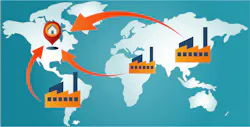
For more than three decades, outsourcing followed a simple logic, moving work to lower-cost locations to reduce expenses and gain efficiency.
That model delivered real benefits, but the business environment has changed. Organizations now face pressure to innovate faster, strengthen resilience, protect worker safety, and meet increasingly complex regulations. As a result, many leaders, including me, are asking a basic question: is cost still the primary factor in deciding where work gets done?
Increasingly, the answer is no.
Instead of focusing solely on offshore outsourcing, organizations are adopting what many industry leaders describe as a best-shore strategy, an approach that evaluates the nature of the work and places it in the location that delivers the greatest overall business value.
The best-shore model recognizes that cost matters, but so do collaboration, speed, resilience, compliance, talent availability, and operational continuity. Rather than choosing between offshore, nearshore, or onshore delivery, organizations are learning to combine all three in ways that support their broader business objectives.
Why Traditional Outsourcing Is No Longer Enough
The original outsourcing model emerged during an era when labor arbitrage created substantial financial advantages. Companies could often reduce costs significantly by moving work to offshore locations while maintaining acceptable service levels.
Today, the equation is more complex.
Business leaders are operating in an environment defined by disruption. Supply chain disruption, cybersecurity threats, geopolitical uncertainty, workforce shortages, regulatory change, and rising customer expectations have created new challenges that traditional outsourcing models were not designed to address.
Many organizations have also discovered that the lowest-cost location is not always the lowest-cost solution.
Communication delays, time zone differences, management overhead, quality issues, rework, travel expenses, and slower decision-making can erode anticipated savings. In highly collaborative environments, the inability to work in real time can become a significant obstacle to productivity and innovation.
This is especially true in industries where safety, compliance, operations, and business performance are tightly interconnected.
A manufacturing plant cannot afford prolonged downtime because a critical engineering issue must wait until another region wakes up. A logistics operation cannot delay responding to a cybersecurity incident due to communication barriers. An environmental compliance issue may require immediate collaboration among multiple teams across different disciplines.
The Rise of the Best-Shore Strategy
The best-shore concept starts with a different premise.
Instead of asking, "Where can this work be performed most cheaply?" organizations ask, "Where can this work be performed most effectively?"
This distinction may seem subtle, but it fundamentally changes how leaders think about global operations.
Different types of work have different requirements. Some activities require scale and cost efficiency. Others require real-time collaboration, local regulatory knowledge, or close interaction with business stakeholders.
The best-shore model recognizes these differences and aligns work accordingly.
Under this approach, organizations typically leverage a combination of offshore, nearshore, and onshore resources, assigning responsibilities based on business requirements rather than geography alone.
The result is a more balanced operating model that optimizes not only cost, but also performance, resilience, and speed.
Understanding the Three Components of Best-Shore
While every organization will design its own version of a best-shore strategy, most models incorporate three complementary delivery layers.
Offshore: Scale and Cost Efficiency
Offshore delivery remains an essential component of global operations.
Countries with large technical talent pools offer organizations access to skilled professionals at competitive costs. Offshore teams often provide the scale necessary to support large transformation programs, application development initiatives, engineering projects, testing activities, data management, and managed services.
In recent years, Southeast Asia has emerged as an increasingly attractive destination for offshore delivery. Countries such as Vietnam have gained recognition for their growing engineering talent, strong technical education systems, and expanding expertise in cloud computing, artificial intelligence, cybersecurity, and enterprise software development.
The key difference today is that offshore is no longer viewed as the entire strategy. Instead, it represents one component of a broader global operating model.
Nearshore: Speed and Collaboration
As businesses become more agile, collaboration has become a critical success factor.
Nearshore delivery helps organizations bridge the gap between cost efficiency and operational responsiveness by locating teams in similar time zones and cultural environments.
For companies operating in North America, Latin America has become an increasingly important nearshore destination. Teams can collaborate during the same business day, participate in real-time meetings, respond quickly to changing priorities, and engage more directly with business stakeholders.
The value of nearshore delivery extends beyond convenience.
Real-time collaboration can accelerate project execution, improve communication, reduce misunderstandings, and support faster problem resolution. In industries where operational continuity and rapid decision-making are critical, these advantages can have a measurable impact on business performance.
Nearshore teams are often particularly effective in agile development environments, operational support functions, engineering collaboration, and customer-facing initiatives that require frequent interaction.
Onshore: Governance and Business Alignment
Certain activities benefit from being located close to the business itself.
Executive engagement, regulatory compliance, stakeholder management, strategic planning, safety oversight, and customer relationships often require local presence and a deep understanding of business context.
Onshore resources provide this connection.
They serve as the bridge between business objectives and operational execution, ensuring that global delivery teams remain aligned with organizational priorities.
For highly regulated industries, onshore capabilities can also help organizations navigate legal, environmental, labor, and compliance requirements more effectively.
Rather than competing with offshore or nearshore delivery, onshore resources enhance the effectiveness of the overall model by providing leadership, governance, and accountability.
Why Best-Shore Matters for Operational Resilience
One of the most compelling drivers behind the best-shore movement is resilience.
Recent years have demonstrated how vulnerable organizations can become when they depend too heavily on a single geography, supplier, or operating model.
Business continuity planning has traditionally focused on facilities, equipment, and supply chains. Increasingly, organizations are applying similar thinking to workforce and service delivery strategies.
A diversified best-shore model helps reduce concentration risk.
By distributing capabilities across multiple regions, organizations gain greater flexibility to respond to disruptions. If one location experiences challenges, other locations may be able to absorb workloads and maintain operations.
This capability is particularly valuable in sectors where downtime can have significant operational, financial, or safety consequences.
Manufacturing, energy, utilities, transportation, healthcare, and industrial organizations all depend on reliable support functions that enable safe and efficient operations.
The ability to maintain continuity across multiple geographies has become a strategic advantage rather than simply an operational consideration.
The Human Factor
Another reason organizations are embracing best-shore strategies is the growing importance of talent.
Many industries face persistent skill shortages in critical areas such as cybersecurity, artificial intelligence, cloud computing, engineering, data analytics, and digital transformation.
Finding the right talent has become more challenging than finding the lowest-cost talent.
A best-shore strategy enables organizations to access specialized skills wherever they exist while maintaining the appropriate balance of governance and collaboration.
This approach also supports workforce flexibility. Organizations can build teams that combine global expertise with local business knowledge, creating a more dynamic and adaptable workforce.
As competition for talent continues to intensify, the ability to tap into multiple labor markets may become one of the most important advantages of the best-shore model.
Moving Beyond Geography
Perhaps the most important aspect of the best-shore strategy is that it shifts the conversation away from geography and toward outcomes.
The debate is no longer offshore versus nearshore versus onshore.
The real question is how organizations can combine these capabilities to achieve their business objectives more effectively.
A successful best-shore strategy does not begin with location decisions. It begins with understanding the work itself.
Which activities require close stakeholder interaction? Which require scale? Which involve regulatory oversight? Which demand specialized expertise? Which can be standardized and delivered remotely?
Answering these questions allows leaders to design operating models that align resources with business needs.
Looking Ahead
As organizations continue to navigate economic uncertainty, technological change, workforce transformation, and increasing operational complexity, sourcing decisions will become more strategic than ever.
The companies that thrive will be those that move beyond the traditional outsourcing mindset and embrace a more flexible, outcome-driven approach.
Best-shore is not about replacing offshore delivery. Nor is it about moving everything closer to home.
The future belongs to organizations that can combine global scale, regional collaboration, and local expertise into a cohesive operating model.
In a world where resilience, agility, and innovation increasingly define competitive advantage, the best location for work is not necessarily the least expensive one.
It is the location that creates the greatest value for the business, for the safety and productivity of its people, and for its long-term resilience.
That is the promise, and the growing reality, of the best-shore strategy.
About the Author
 Erik Mendez
Erik Mendez
Erik Mendez, logistics expert and executive director for FPT Americas
With more than 30 years of international business experience, Erik Méndez is a recognized executive specializing in business development, enterprise software, IT consulting, digital transformation, and technology staffing across Latin America and the United States.
He is currently serving as Executive Director for Mexico at FPT Software. He leads the company's expansion strategy throughout Latin America, helping organizations accelerate their digital transformation initiatives through Artificial Intelligence, SAP, Cloud, Data Analytics, Enterprise Applications, and Digital Engineering services.