Navigating Risk as Tariff Uncertainty Continues in 2026
Key Highlights
One of the most important foundational elements that organizations need to have in place to navigate today’s tariff environment is a clear view of their tariff stacking – when a product is subjected to multiple tariffs at the same time.
supply chain organizations need to shift away from financial and operational models that are based on a single fixed tariff rate in favor of a much more fluid model whereby they maintain multiple forecasts to account for alterations that could take place.
Organizations that are able to centralize their operations will not only have much better visibility into their tariff expectations and liabilities but will be able to insulate themselves much more effectively than those that rely on siloed approaches.
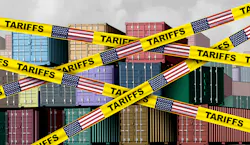
From disruptions in the Strait of Hormuz to broader global economic uncertainty, 2026 has provided the supply chain and logistics categories with no shortage of pain points to navigate. However, perhaps nothing has proven to be a more nagging headache than tariffs.
To say that the 2026 tariff landscape is anything but incredibly dynamic and complex would be a major understatement. Throughout this first portion of 2026, supply chain stakeholders have found themselves lurching from one tariff related development to the next.
This reality once again reared its head with the expiration of the 10% Section 122 on July 24, tariffs, enacted by the Trump administration following the Supreme Court’s decision to strike down the International Emergency Economic Powers Act (IEEPA) tariffs in February.
As the Section 122 tariffs have elapsed, supply chain organizations now find themselves contending with a new web of tariff regulations, headlined by Section 301 tariffs which have seen tariff rates of up to 12.5% levied on 60 major global trading partners.
This is in addition to a 25% tariff levied against certain Brazilian imports and with a further 50% tariff provisionally set to snap into place against specific Canadian goods on August 19). Steel, copper, aluminum and related derivative products are also still subjected to standing tariffs under Section 232. Virtually every import of materials and goods into the United States is impacted in some way.
Compounding this is that each action has its own network of product scopes, exclusions and other factors that need to be navigated, creating a highly intricate layered tariff environment.
To remain compliant, it is pivotal that organizations establish a watertight understanding of their tariff exposure while also building an operational infrastructure and strategies that will allow them to be responsive to any tariff movements.
Understand your tariff stacking exposure
One of the most important foundational elements that organizations need to have in place to navigate today’s tariff environment is a clear view of their tariff stacking – when a product is subjected to multiple tariffs at the same time.
While some trade actions include exclusions to avoid overlapping, some duties are put in place to compound on top of existing levies. For example, before its expiration, Section 122 included some exclusions for imports that were already subjected to Section 232 tariffs, but not others.
Moreover, just because two products come from a similar supply chain doesn’t mean that businesses should assume their tariff treatments are the same. For example, two similar component parts from a single supplier could be classified differently.
Therefore, a stacking analysis is pivotal in determining a business’s immediate exposure and broader strategic planning. Once a full view of stacks and exclusions is constructed, stakeholders can then make better decisions regarding customer pricing and sourcing that will allow them to build more stable financial footings.
Balancing tariff staying power with unknown duration
While the circumstances and nuances of each tariff may vary, because litigation or negotiations are often slow-moving, the reality is that duties will likely exist for extended periods even if they are eventually modified or struck down. After all, the original Section 232 and Section 301 China Legacy tariffs have been modified, but are still largely in place over eight (8) years later.
For example, while Section 122 tariffs were limited to just 150 days without Congressional action, because Section 301 tariffs are tied to other countries’ trade practices and Section 232 tariffs are tied to national security findings, their duration is much more indeterminate.
For this reason, supply chain organizations need to shift away from financial and operational models that are based on a single fixed tariff rate in favor of a much more fluid model whereby they maintain multiple forecasts to account for alterations that could take place. In tandem, tariffs need to be baked into near-term cost planning with models taking into consideration a variety of factors from products that are in transit to future purchasing scenarios.
Trace each action’s legal authority
Because each tariff program is based on unique statutes and frameworks, the only way to fully understand legality is to assess each action on an individual basis as the legal questions raised by one case may – or may not – impact another.
This state of affairs means that supply chain organizations need to take a two-pronged approach: complying with tariffs that are rolled out in the here and now while also constantly tracking litigation surrounding each action.
Businesses also need to keep meticulous records of entry documents, proof of payment, and other import related assets which can help them secure refunds in the future should the opportunity arise, as was the case when the Supreme Court ruled against the IEEPA tariffs.
Creating a dedicated workflow
As seen with the unwinding of the IEEPA tariffs, the opportunity to potentially reclaim tariff expenditures is very real. The IEEPA refund process has put clear guidelines and processes in place. However, the process requires significant diligence and proactivity.
Businesses will need to provide documentation that clearly illustrates all aspects of their entries that they are seeking to reclaim. This includes not just identifying eligible entries, but confirming importers of record, in-depth reviews of each entry and more.
Organizations also need to have a firm grasp on their back-end financial information to make sure refunds are streamlined, and any snags are limited. This includes making sure banking information is correct and established with the Automated Commercial Environment (ACE) platform – the hub for the U.S. Customs and Border Protection’s (CBP) processing of international imports and exports and refund processing.
Businesses also need to broaden their reviews to take into account the impact of refunds on their broader networks and the contractual obligations of who is the recipient of the recovered funds. For example, funds recovered by the importer of record might actually be an amount owed to a customer and not a financial recovery for the company themselves.
Build an established tariff process
While the shifting tariff landscape has created significant disruptions to organizations’ operations, it has also presented them with an opportunity to rethink and modernize their tariff workflows. Based on the evolution of the tariff landscape thus far, it is unlikely that we have seen the last wrinkle crop up as negotiations and litigation continue to unfold.
The tariff landscape of the last several years has put nearly unmatched pressure on the supply chain world. Yet, it has allowed businesses to look inwards and to revamp and refine existing import and export reporting, governance and operations.
Organizations that are able to centralize their operations will not only have much better visibility into their tariff expectations and liabilities but will be able to insulate themselves much more effectively than those that rely on siloed approaches.
About the Author
 Charles Clevenger
 Charles Clevenger
Charles Clevenger is a principal at UHY. His specialties include complex supply chain, procurement strategy and structure, operations management, total value management analysis, and solutions. He also has significant experience collaboratively integrating these areas into the overall business to optimize performance and financial results.