3 Questions to Ask Before the Next Supply Chain Disruption
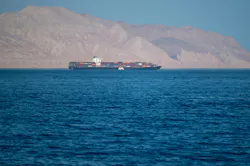
In light of companies having to adapt to the changing routes in the Middle East, BSI Consulting explored the effect of diversifying shipping routes.
"Diversification that moves volume without dispersing it does not reduce exposure," said David Fairnie, a principal consultant at BSI Consulting, in a white paper, Supply Chain Lessons from the Middle East Conflict. " It relocates exposure, and concentrates it somewhere with less protection, thinner contingency and no established alternative of its own."
The paper lays out three questions that should be answered before the next disruption (excerpted below).
What must keep working for our product to reach a customer?
Not who supplies us - what must function. Energy, packaging, transport corridors, specialty inputs, cold chain. The helium shock reached three unrelated sectors because it sat in that category for all of them.
Where do our mitigations converge?
Two suppliers on different continents routing through the same strait is one dependency, not two. The organizations caught out in July were those whose primary and backup routes shared a chokepoint they had never mapped together.
Which of our decisions are reversible?
Restocking is reversible. Requalifying a supplier is not. When stability may last three weeks, knowing in advance which moves can be undone is worth more than knowing which move is optimal. Four criteria separate them: what reversal costs, how long it takes, what contractual commitment it creates, and whether it triggers requalification or regulatory approval. Decisions that fail on the last two should not be taken on a three-week signal.
Fairnie notes another observation that cuts across all three of those questions. Companies were focused on lead time and had to factor in a number of issues, including reconciling what was in transit, what a contract permitted, what a switch would cost, and what each option foreclosed. And companies that had to make these decisions ad hoc lost days in the process.
"Those that could assemble it quickly bought themselves the one thing the environment does not supply: time to choose," Fairnie wrote. "Answering these questions does not require new systems. It requires asking them of the network you already have, before the next disruption makes them urgent."
Not having a system is very common, as the paper cites a survey, Argon & Co’s Operations Outlook 2026, which surveyed more than 800 C-suite leaders, and only 22% of firms were actively conducting risk assessments for geopolitical threats at the end of 2025.
The survey found that the same low number applied to companies who said they were building formal scenario planning capability.
While the gap is surprising, Fairnie says it is not a failure of intelligence. "It is a resourcing decision, taken when geopolitical risk sat at the periphery of operational planning rather than at its center."