Does US Want Out of USMCA?
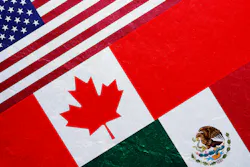
As the deadline for the USMCA Joint Review and the Administration’s deal was missed, some believe that the US wants to get out of the trade agreement.
However, Drew DeLong, dead of Corporate Statecraft at Kearney Foresight, an arm of global management consultancy Kearney, believes that there’s much more than meets the eye.
Here is his analysis.
USMCA is critical to several key supply chains that the U.S. deems a national security priority. Therefore, ending USMCA would mean eliminating those supply chains. The U.S. and Mexico have already concluded two rounds of negotiations on a bilateral basis, while Canada has shifted their negotiating posture to be open to partner more with the U.S. (mostly rhetoric vs. action, but still progress).
My current expectation is that we will see two separate bilateral deals “stack” on top of the existing USMCA framework. The trilateral foundation underneath may remain in an annual review cycle, or we may get lucky and post-bilateral deals; they could all agree on the set foundation and extend… but that’s a wild card.
U.S.-Mexico negotiating priorities. The latest results of the negotiations with Mexico show a mixed view of key negotiating priorities. The U.S. wants American content thresholds for auto supply chains: the big wild card here is whether this standard is set first for auto and will then be used on other key industries. Mexico wants Section 232 relief for metals (e.g., steel & aluminum), but the pushback has been that Mexico would need to adopt their own “mirror” tariffs if that happens—for example, the U.S. lowers tariffs down to 15-25%, but Mexico raises their own metals tariff up to 15-25% to avoid circumvention.
The U.S. is also pushing a disqualifier for duty-free treatment based on content from certain countries—that list of countries has yet to be determined.
My expectation: USMCA will stay, but rules of the game are set to change dramatically. News headlines will gravitate toward “Trump wants out of USMCA,” but I think a push toward a reconfigured “North American Fortress” approach is the more likely direction.
Canada’s Premier Ford socialized Canada’s vision for the USMCA negotiations and titled their position the same “North American Fortress” strategy. As an example, for companies not running the scenario modeling on how rules of origin/USMCA changes may impact their (1) product design, (2) BOM configuration, and (3) network strategy through North America, that window is closing rapidly.