Need Talent Development Ideas?

As finding talent continues to be a challenge for supply chain managers, I searched around to see what ideas are circulating on how to solve this issue.
Ideas range from the ability of community colleges to provide return on investment in terms of employment from revised Pell grants, to questioning the need for degrees, to helping employees conduct skills audits.
Funding Talent Placement
America doesn’t need more credentials; it needs a talent operating system. That's the title of an article written by Mordecai Ian Brownlee, who is president of the Community College of Aurora in Colorado.
On July 1, the Workforce Pell grant program went into effect. It requires state government to ensure that its public academic institutions provide a return on investment in terms of employment.
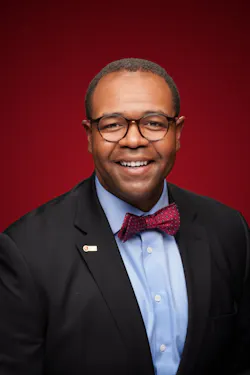
Brownlee views this as a win for community colleges as he feels they are “inherently suited to function as economic infrastructure in the Workforce Pell era.” He says that these centers of learning are able to "respond quickly through programmatic development to meet workforce needs.”
This revised Pell grant program addresses what he calls a longstanding gap in performance.
“As America works to establish such a system, especially given the national demographic realities currently underway and their effects on the national employee ecosystem, Workforce Pell stands as a strong pilot test for the country to identify examples of excellence at the state level for the rest of the country to follow regarding academic program accountability, data systems development and state-led college-to-career pipeline growth and development.”
Read more of Brownlee's insights.

No Degree Necessary
Focusing on candidates' skills rather than their degrees has been the topic of discussion for a few years. Given the current economy, the discussion has moved into action.
In an article, No Degree Necessary, Korn Ferry points out that 30% of job postings on LinkedIn now omit professional-degree requirements. That number is a substantial increase from 19% in 2019.
And the company’s own survey in 2025 found that 67% of firms said they planned to adopt skills-based rewards by 2028. “Organizations that reward people for the skills they bring—and build—will be better equipped to stay agile, innovative, and ready for what’s next,” says Douglas Maxfield, a Korn Ferry senior client partner in the firm’s Global Technology Industry practice.
The key to success, however, is to clearly understand what skills a company will need in the future. The article notes that internal disagreements about which skills are critical versus which skills are nice to have are preventing full-scale adoption of this hiring strategy.

How Employees Can Close Their Skills Gap
Having the privilege of talking with Abe Eshkenazi, CEO of the Association for Supply Chain Management (ASCM), I know him to be an optimist. So, when faced with the statistics that even as the supply chain industry is growing at 11.2% per year and for every six job openings just one person has the skills to perform the job, he feels there is hope and so he offers some strategies.
Noting that this industry is “particularly susceptible to skills gaps due to its rapid evolution driven by technology, globalization and shifting market demands,” he points out some practical steps that employees can address this challenge.
Conduct an audit of your current skills
What’s that saying: if you don’t know where you are, you won’t know how to get to where you are going? Eshkenazi suggests identifying areas of strength and weakness. "Then think about how you can better position yourself professionally. Consider formal assessments, peer feedback and self-reflection on past projects to gain a comprehensive understanding of your capabilities," he advises.
Hone your technological expertise
It's important for employees to "learn all you can about the latest innovations — artificial intelligence, automation and the like — in order to apply them effectively," he says.
Prioritize ongoing advancement
"Professionals must blend the latest innovations with their understanding of fundamental processes," he explains. To help with this, ASCM offers a Supply Chain Technology Certificate.
About the Author
 Adrienne Selko
Adrienne Selko
Senior Editor
http://mhlnews.com
Adrienne Selko is also the senior editor of EHS Today and a former senior editor of IndustryWeek.