The Effect of Unexpected Downtime on Forklift Cost
Key Highlights
- Operational data and operator feedback are crucial for selecting the right equipment, optimizing deployment, and improving productivity and fleet longevity.
- Long-term planning and fleet analysis over 5-10 years help ensure equipment remains effective, supports business growth, and minimizes unexpected costs.
- Effective maintenance, serviceability, and energy management are key factors in reducing operational disruptions and controlling costs.
- Strategic use of rentals and equipment redeployment can address capacity needs while controlling costs and maintaining operational efficiency.
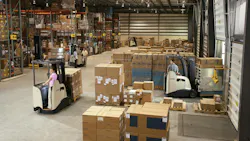
When considering a forklift purchase decision, it is often tempting to focus on the up-front cost of the equipment itself, which disregards many factors that can ultimately affect a user’s total cost of ownership over the forklift’s life. An informed buyer knows there are several factors that can affect the total cost of ownership (TCO), including the forklift’s power system, fuel or electricity, replacement parts, and service requirements. Even more importantly, that buyer also considers the total life of the forklift and the cost of the individual to operate it shift after shift.
Forklift buyers that focus solely on acquisition cost are making purchase decisions based on less than 8% of the TCO. Even the costs of power, parts and service account for single-digit percentages of the total cost. Buyers that make decisions based on any of these costs or even their sum total may identify small savings opportunities, but once the lift trucks are operational, slower throughput, unplanned downtime and maintaining backup capacity can quickly erase these savings.
The cost of unplanned downtime, regardless of the cause, can quickly increase TCO due to one significant factor. Research shows that the cost of the operator accounts for at least 83% of the TCO over the life of the lift truck. Think of it this way—a gas-powered vehicle sitting at idle is getting zero miles per gallon while the fuel continues to be depleted. Similarly, a forklift that isn’t moving product while the operator is still being paid is effectively getting zero miles per gallon. Worse yet, the lost work still needs to be completed, often leading to extended shifts, overtime or short-term equipment rental until the forklift is up and running again.
A more useful TCO question is what it costs to complete the work reliably, shift after shift and year after year. A lift truck isn’t the lowest-cost solution if it can’t maintain the required pace, isn’t available when needed, or requires the facility to purchase and maintain additional equipment to support spikes in demand.
Define the Work and Desired Business Outputs
Acquisition cost, financing, monthly payments and hourly service rates are valid inputs, but they don’t consider whether the fleet supports the operation effectively. A more complete analysis also considers capability, throughput, uptime and availability.
Warehouse operations purchase forklifts to move material, maintain production and get revenue-producing product out the door. TCO should therefore connect equipment cost to measurable business outputs through metrics such as cost per pallet moved, cost per order shipped and picks or putaways per hour.
It should also account for the factors that interrupt that output: production-cycle time, equipment availability during peak periods, unplanned downtime and rental expense. Labor requirements, product and facility damage and the fleet size needed to complete the work also matter.
The objective is to support a consistent and uninterrupted flow of product through the facility. Therefore, operational considerations are critical, perhaps even more critical than quoted costs, when making a purchase decision.
Validate Assumptions through Operators, Trials and Fleet Data
A credible TCO process combines commercial terms with application trials, service history and operational feedback. Because labor associated with operating a forklift represents a much larger lifetime investment than the equipment itself, improvements in lift truck performance can influence operator confidence, comfort and willingness to work at the required height, which may affect productivity, throughput and operator retention.
Structured demonstrations or trials give operators a meaningful role in the evaluation. Their feedback can show how well the equipment supports the work under real operating conditions. Over the life of the forklift, operator behavior can also influence throughput, equipment life, damage and maintenance expense.
Required training and operator assist technology should be considered in the same context. Operator assist systems can reinforce training even when supervisors aren’t able to provide feedback, helping to reduce avoidable damage and related downtime.
Capturing operational data is also important. Analysis of this data can show when and where lift trucks are active, what that activity produces, and how downtime can affect availability and operating expense. Data can also expose mismatches between equipment and work.
These measurements may challenge assumptions about fleet size, equipment type and deployment, and help determine what equipment is needed and how each forklift should be deployed.
Translate Accumulated Knowledge into Fleet Decisions
The knowledge gained through operational data analysis should guide equipment selection and deployment. Underspecified equipment can reduce productivity and may require additional equipment to complete the required work. Overspecified equipment can increase acquisition cost without providing operational value.
Deployment matters, too. A newer, higher-performing unit may provide more value in a high-throughput application, while an older but serviceable lift truck can be moved to lower-utilization work. Redeploying equipment according to utilization and capability can improve productivity and reduce repair demands.
Thinking Beyond the Forklift
The lowest labor rate does not always produce the lowest maintenance cost. A provider charging $200 an hour may deliver better value if service is needed twice a month, while a provider charging $100 an hour may cost more through weekly visits or longer repairs.
A better comparison considers service frequency, downtime and whether repairs occur during peak operations. Repeat repairs, parts consumption and mean time between failures can show whether maintenance is addressing the underlying cause. Routine service can usually be scheduled around production demands; unplanned work during a busy shift carries a greater operational cost.
Durability and serviceability also matter before purchase. Consider whether technicians can reach frequently serviced components, whether routine replacements are straightforward, and whether the truck has been designed and tested for the intended duty cycle. When a component fails sooner than expected, conduct a root-cause analysis. Failure may be due to the application environment, but it may also result from using low-cost, inferior parts.
Energy cost extends beyond batteries and electricity. Power options should be evaluated based on the charging space and infrastructure they require, battery-handling labor, the time operators spend away from material movement, battery life, available power and flexibility as volumes or operating hours change.
The utilization of rental forklifts can also be a useful indicator. Seasonal rentals may support a deliberate capacity plan, but regular rentals outside peak periods may point to persistent equipment availability problems that could be avoided.
Think Long-Term
Most equipment alternatives can appear attractive at the point of purchase. While it may be tempting to make a purchase decision based on today’s information, a TCO analysis should consider the characteristics of the fleet in five or even 10 years. Is the equipment still delivering the required performance? Are the right lift trucks available when needed? Is the fleet operating at an appropriate cost for the business? The answers to these questions can help differentiate between calculating the price of a lift truck and understanding the total cost of getting the work done.
About the Author
 Dan Zinn
Dan Zinn
managing director–corporate sales
Dan Zinn is managing director–corporate sales with forklift manufacturer Crown Equipment Corp.