The Future of Warehousing and Distribution: Five Critical Shifts to Watch
Key Highlights
- Humanoid robots are moving from pilot programs to limited production roles, requiring controlled trials, safety protocols, and workforce training to ensure smooth integration.
- Reverse logistics is becoming a core operation, demanding dedicated zones, integrated data systems, and new metrics to handle increasing returns and resale activities efficiently.
- Route optimization must respond within hours rather than days, necessitating better tools, unified data, and flexible carrier relationships to meet unpredictable demand patterns.
- Load factor is now a primary sustainability metric; filling trucks to capacity and consolidating loads can reduce emissions and improve operational efficiency immediately.
- A clear AI strategy is essential to balance automation with human judgment, automating repetitive tasks while empowering staff to handle complex decisions and exceptions.
Your warehouse teams face compounding daily pressures. Routes that worked last quarter don't make sense anymore. Returns are piling up faster than outbound shipments. And the technology you bought two years ago can't keep up with what customers expect today.
Five specific shifts will define how warehouses and distribution centers operate this year. Some will feel incremental. Others will require you to rethink staffing, routing and performance metrics entirely.
The operators who move fastest on these changes will pull ahead. Here’s what’s changing and how to prepare for it.
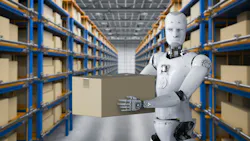
Prediction 1: Humanoid Robots Move from Pilots to Limited Production Roles
The global market for humanoid robots could reach $38 billion by 2035, driven largely by logistics and manufacturing. If you think these robots are still five years away, you’re behind. The first pilot fleets are already deployed in select warehouses.
In 2026, more operators will move humanoid robots from pilot programs to limited production roles. The next phase focuses on three things: scale, reliability and how these robots will work safely alongside your existing teams. Widespread deployment is still a few years out, but the testing phase is happening now.
Warehouse operators need to start controlled trials now. Define clear safety protocols. Figure out which tasks make sense for robots and which still need human workers. The goal is to find where automation complements your workforce, not just cuts headcount.
Tasks like repetitive picking, palletizing and inventory scanning are good starting points. Training your team to work with these robots matters as much as the technology itself. Phase the implementation slowly so your workers can build confidence with the machines.
Start with a single zone or shift to contain complexity. Test exception handling protocols—what happens when a robot encounters an obstacle, when a product doesn’t scan correctly, or when safety protocols trigger a shutdown.
The real challenge here is cultural. Success depends on whether your team trusts and understands the robots working beside them. If your workers see robots as a threat rather than a tool, the technology won’t deliver results no matter how well it works technically.
Involve your floor workers early in the selection and testing process. Show them how robots handle the physically demanding work while they focus on problem-solving and quality control. Make it clear that robots are there to make their jobs easier, not eliminate them.
Prediction 2: Reverse Logistics Becomes a Core Operation, not an Afterthought
The resale market is growing 2.7 times faster than the overall apparel market. That growth is creating operational pressure inside warehouses. Returns, resale and re-commerce volume are all increasing at the same time.
Tariffs and delivery costs are pushing more consumers to buy locally or secondhand. That means more products flowing back into your facility, not just out of it. Reverse logistics can’t stay bolted on as an afterthought anymore.
Warehouse operators need to integrate reverse logistics into forward operations. Start tracking recovery rate and cost per reverse mile the same way you track outbound metrics. The companies that can move goods as efficiently backward as forward will have a real advantage.
This requires rethinking physical space. Allocate dedicated zones for inspection, sorting and repackaging near receiving to minimize cross-facility movement. You’ll need quality grading stations where staff assess condition and route items to resale, refurbishment, or disposal. Staff these zones separately from outbound operations so returns don’t create bottlenecks or pile up unprocessed.
The biggest obstacle is data. Circular models only work when your systems can track resale, returns and re-commerce in one place. Disconnected systems create waste instead of reducing it. If your warehouse management system can’t handle reverse flow as smoothly as outbound, fix that before volume forces your hand.
Prediction 3: Route Optimization Has to Respond in Hours, or You’ll Lose Volume
AI shopping tools are changing where consumers find products. Instead of searching only on major platforms, buyers can now discover items across thousands of independent sellers with the same ease. Demand that used to concentrate at a few fulfillment hubs now spreads across hundreds of locations.
Orders will come from more locations, in smaller quantities, with less predictable patterns. Your routes need to adapt faster than they do now. Currently, it takes an average of two weeks to plan and execute a response to a supply chain disruption. That’s too slow when demand can shift overnight.
$1 spent on agility is worth $10 on prediction. The operators who can reconfigure routes, capacity and carrier relationships in real time will handle this shift better than those still running weekly planning cycles.
Make reaction time a KPI. Aim to cut response time from days to hours. That means your dispatch teams need better tools, and your fleet management system needs to handle changes on the fly. Carrier relationships will matter more when you need to add capacity quickly or reroute midday.
On the dock, this means more dynamic door assignments and flexible loading schedules. Orders that arrive late in the day can’t wait until tomorrow’s planned routes if customers expect same-day or next-day delivery.
Clean data is what makes this possible. If your order data, route history and capacity information live in separate systems, you can’t move fast enough. Agility without unified data just creates more chaos. Invest in connecting your systems before you try to speed up your response time.
Prediction 4: Load Factor Becomes Your Primary Sustainability Metric
Last year, 58% of truckloads were driven half-empty. That's a waste of fuel, money and capacity.
Tariffs, trade shifts and rising costs are squeezing margins across the board. Warehouse operators can’t wait years for EV pilots or new infrastructure to pay off. You need efficiency you can measure now.
What can you do now? Fill trucks to capacity. Optimize routes to cut empty miles. Consolidate loads before they leave the dock. These changes reduce emissions immediately without major capital spending. Waiting for the perfect green solution means missing opportunities that are already in front of you.
I also recommend auditing underutilized routes and tracking load factor as a sustainability metric. You’ll spot patterns you couldn’t see before, like routes that consistently run half-full, time windows that create inefficiency and customers whose order volumes don’t justify dedicated runs.
Route planning and load consolidation are where you’ll see the fastest returns. Your transportation management system (TMS) should already have the data you need. Use it to identify which shipments can combine, which delivery windows can shift and where multi-stop routes make more sense than direct runs. The goal is for fewer trucks to carry more freight per trip.
Prediction 5: AI Strategy Needs to Define Human vs. Machine Decisions
Only 23% of supply chain organizations have a formal AI strategy right now. This creates problems for when you start adding AI tools to your operations, especially without thinking through where they belong.
Without a clear plan, AI replaces judgment instead of supporting it. Then you end up with systems making decisions they shouldn’t or workers ignoring AI recommendations because they don't trust them.
That’s why AI should handle repetitive, data-driven tasks like rerouting, planning and execution, while people should focus on relationships, context and problem-solving. The operators who figure out a healthy balance between people and technology will see better results than those who automate everything or resist automation entirely.
Define which decisions can be automated safely and which need human review, then measure performance on both sides. In your warehouse management system (WMS), AI can suggest optimal pick paths and flag inventory discrepancies, but humans should still approve major layout changes or resolve complex exceptions. AI can also optimize slotting and putaway decisions based on velocity and order patterns, but warehouse supervisors should override those recommendations when they conflict with seasonal shifts or upcoming promotions.
In dispatch software, AI builds initial routes while dispatchers handle last-minute customer requests. For labor planning, AI forecasts staffing needs based on order volume, while supervisors account for employee skills, training schedules and team dynamics.
Start Now, Not Later
These five predictions have one thing in common: They reward speed over perfection. The operators who adapt quickly using the systems they already have will outperform those waiting for ideal conditions.
Pick one area where your operation is already feeling pressure and start there. Small changes compound faster than you think, especially when the rest of your industry is still planning.
None of this requires a three-year roadmap or board approval. These are operational decisions you can make this quarter. Move on them before your competitors do.
About the Author
 Nishith Rastogi
Nishith Rastogi
CEO and Co-Founder
Nishith Rastogi is the CEO and co-founder of Locus, a provider of agentic transportation management system (TMS) solutions, where he leads global strategy, innovation and product development. He drives the company’s international expansion and oversees its technology vision. Before founding Locus, Rastogi worked at Amazon, developing algorithms to combat credit card fraud, and created RideSafe, a real-time route deviation app designed to improve women’s safety. A published author in experimental physics and holder of multiple machine learning patents, Rastogi earned a Bachelor’s in Electronics and a Master’s in Economics from BITS Pilani.