Roundup: Warehousing Automation Benefits
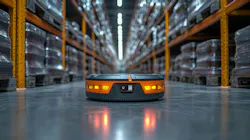
Automation use in the warehouse continues to increase. By 2027, over 6% of warehouses worldwide will have implemented some form of automation, according to a survey by Interact Analysis.
ROI
So, companies are learning where they can get faster return on investments.
A recent article on Insurance Edge noted that the companies that are seeing strong returns share a few characteristics:
- They modeled their workflows before selecting technology. Process mapping identified the actual bottlenecks, not the assumed ones.
- They integrated their WMS with their automation layer. Warehouse management systems and robotic systems share data in real time, not in batch updates.
- They staged their rollouts. Piloting in one zone before expanding company-wide lets teams debug integration issues without disrupting full operations.
- They planned for exceptions. Autonomous systems handle standard SKUs well; non-conveyable items, returns, and irregular packaging still need human intervention built into the design.
The full article explores a number of issues related to automation in the warehouse.
Automation Case Study - Decathlon Sporting Goods
Decathlon, one of the globe's largest sporting goods retailers, said it has experienced significant productivity gains at seven of its European warehouses, according to an article in Business Insider.
At its warehouse located in Portugal, the warehouse was able to increase orders from 57,000 to 114,000. The robots they use can move, store and retrieve hundreds of thousands of times a day from storage bins.
Along with productivity, the human labor force is seeing improvement in their daily workflow as the distance walked per day in their UK site has decreased from over six miles to under one mile per day.
Most importantly, safety has improved as well. In that UK site, workplace injuries related to order picking have decreased from 1 in 5,000 to 1 in 10,000.
Improving Warehouse Automation Movement
Drilling down to the specifics of how constantly improving technology can continue to increase productivity, researchers from MIT, in collaboration with technology company Symbotic, developed a method that ensures robots move smoothly through the warehouse.
An article on the research explained that a hybrid system " utilizes deep reinforcement learning, a powerful artificial intelligence method for solving complex problems, to figure out which robots should be prioritized. Then, a fast and reliable planning algorithm feeds instructions to the robots, enabling them to respond rapidly in constantly changing conditions."
To avoid such an avalanche of inefficiencies, researchers from MIT and the tech firm Symbotic developed a new method that automatically keeps a fleet of robots moving smoothly. Their method learns which robots should go first at each moment, based on how congestion is forming, and adapts to prioritize robots that are about to get stuck. In this way, the system can reroute robots in advance to avoid bottlenecks.
The hybrid system utilizes deep reinforcement learning, a powerful artificial intelligence method for solving complex problems, to figure out which robots should be prioritized. Then, a fast and reliable planning algorithm feeds instructions to the robots, enabling them to respond rapidly in constantly changing conditions.
“By interacting with simulations inspired by real warehouse layouts, our system receives feedback that we use to make its decision-making more intelligent. The trained neural network can then adapt to warehouses with different layouts,” said Han Zheng, a graduate student in the Laboratory for Information and Decision Systems (LIDS) at MIT and lead author of a paper on this new approach.
The result of these simulations was that this new approach achieved about a 25% gain in throughput over other methods.
About the Author
 Adrienne Selko
Adrienne Selko
Senior Editor
http://mhlnews.com
Adrienne Selko is also the senior editor of EHS Today and a former senior editor of IndustryWeek.