47% of Supply Chains Reduced Headcount by 10% Due to AI
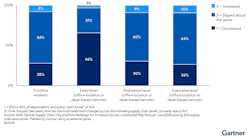
In what many have feared, the impact of AI is taking a toll on headcount. A new Gartner survey shows that nearly half of supply chains have reduced headcount by an average of 10.5% over the past two years.
Additionally, 66% of supply chain leaders report headcount reduction is concentrated at the entry level, more than double the percentage reporting reduction at other levels in the supply chain workforce.
“AI is thinning the entry-level supply chain workforce faster than most chief supply chain officers (CSCOs) are redesigning the talent pipeline, creating a future capability gap that will actually weaken their organizations’ AI performance,” said Tess Frenzel, director analyst in Gartner's suppy chain practice, in a statement.
“While impacts to entry-level positions from AI continue to grab the most attention, our research also shows a notable change in expectations for the skills required for middle-management positions, compared with just two years ago,” Frenzel continued. “Producing fewer candidates for traditionally defined leadership roles is a miscalculation, as supply chains will require new competencies both for entry-level and leadership positions as a result of working alongside AI.”
Elevate Entry-Level Role Expectations
Reducing entry-level hiring without meaningfully changing role responsibilities and requirements can create a more fragile talent pipeline. Supply chain organizations have traditionally relied on large entry-level workforces to produce qualified candidates for more senior positions, even amid high attrition. A smaller incoming workforce leaves fewer employees available to advance, increasing the importance of selecting, developing and retaining high-potential entry-level talent as leadership roles continue to evolve.
Additional analysis of the survey data found that high-performing supply chains, defined as the top 25% based on AI integration, AI-enabled automation, and business outcomes, are responding by elevating entry-level roles.
“Compared with two years ago, these organizations require more domain-specific and analytics skills and greater supply chain experience, while involving entry-level employees in less repetitive work and more consequential decisions,” said Frenzel. “This approach can attract and engage higher-skilled talent while better preparing employees to advance into the senior positions which will also evolve as AI is embedded within the organization.”
Gartner recommends the following actions for CSCOs to elevate entry-level roles for stronger talent pipelines and AI outcomes:
- Pair technically skilled entry-level employees with mid- and senior-level employees to develop stronger business acumen, support AI deployment and oversight, and build the experience emerging talent will need to manage future AI operations.
- Establish visibility into AI use, regularly test the assumptions and data underlying AI models, and assign clear accountability for outcomes.
- Adopt cross-pollinated supply chain team structures for stronger aligned KPIs and dispersed knowledge for higher-value AI deployments.